
Losing a tooth is annoying enough. But then your dentist mentions that replacing it with a traditional bridge might involve reshaping the perfectly healthy teeth on either side. Wait a minute. Why should two innocent teeth get involved when only one is missing?
If you’re exploring dental implant treatment in Viman Nagar, Pune, SmyleXL Dental Clinic offers an approach worth understanding. Unlike a conventional dental bridge, an implant can replace the missing tooth without requiring the neighboring teeth to be ground down.
Sounds interesting, right? But how does an implant manage to stay in place without borrowing support from the teeth beside it?
Let’s find out.
Table of Contents
ToggleCan A Dental Implant Replace a Missing Tooth Without Damaging Adjacent Teeth?
Yes! A dental implant can replace a missing tooth without requiring the dentist to reshape the healthy teeth beside it.
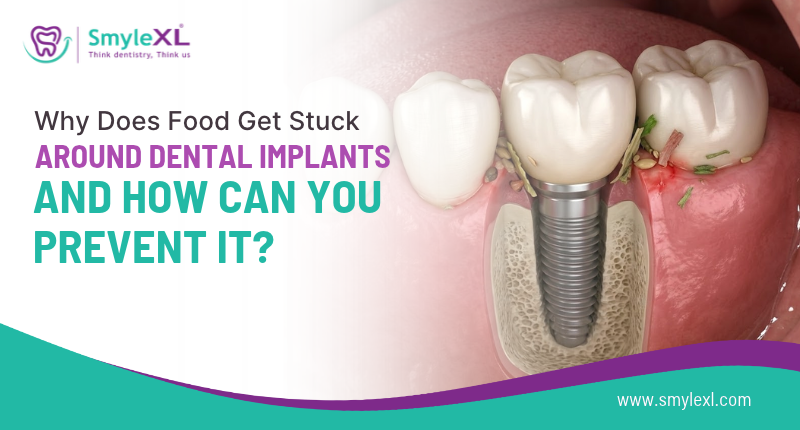
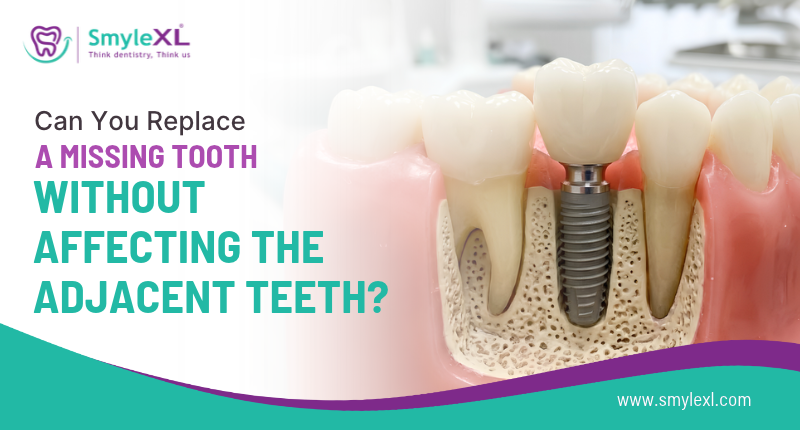
A single tooth implant is placed in the jawbone, where it acts as an artificial tooth root. A replacement crown is then attached to complete the restoration.
Unlike a conventional bridge, an implant gets its support from the jawbone rather than neighboring teeth.
This makes it a possible missing tooth solution for people who want to preserve their remaining natural tooth structure.
However, no adjacent tooth grinding doesn’t mean the procedure has zero risks for nearby teeth. Careful planning and sufficient space are important to avoid damage during placement.
Why Do Some Tooth Replacement Options Involve Adjacent Teeth?
Not all tooth replacement options work the same way.
A conventional dental bridge typically uses the teeth on either side of the gap as supporting structures. These teeth are reshaped so crowns can fit over them and hold the replacement tooth.
This is why someone looking for a treatment for gap in teeth might hesitate when their neighboring teeth are healthy.
Implants offer a different approach.
How Do Implants Compare With Other Replacements?
| Replacement option | Does it require support from adjacent teeth? | How does it work? |
| Conventional dental bridge | Usually, yes | Neighboring teeth support the replacement |
| Single dental implant | No | The jawbone supports the implant and crown |
| Removable partial denture | Often uses nearby teeth for support or retention | A removable appliance fills the gap |
The implant vs removable denture comparison is also important because removable dentures may rest partly on the gums and use clasps around neighboring teeth.
When considering a fixed vs removable prosthesis, the choice depends on your oral condition, preferences, and suitability for each option.
At SmyleXL Dental Clinic, before recommending dental implant treatment in Viman Nagar, all these factors are taken into careful consideration.
How Does a Dental Implant Work Without Depending on Nearby Teeth?
Here’s the clever part.
Instead of attaching a replacement tooth to neighboring teeth, an implant creates its own foundation inside the jawbone.
Step 1: Creating a Foundation
Your dentist first examines the missing tooth area to assess bone support and the available space.
A titanium implant post is commonly used as the artificial root. It is positioned in the jawbone without requiring crowns on adjacent teeth.
For someone considering a permanent tooth replacement, this independent support is an important distinction.
Step 2: Allowing the Implant to Integrate
After placement, the surrounding bone gradually bonds with the implant surface.
This is called the osseointegration process.
It helps create a stable foundation for the final implant-supported restoration.
The integration process takes time, and your dentist evaluates healing before proceeding with the final restoration.
Step 3: Adding the Replacement Crown
Once the implant is ready, an abutment connects it to the visible replacement tooth.
The dental crown placement is planned around the neighboring teeth, including their shape, position, and bite relationship.
The result aims to provide a natural-looking restoration without using adjacent teeth as anchors.
That’s the essential difference between an implant and a conventional tooth-supported bridge.
What Are the Benefits of Preserving Adjacent Teeth?
When you’re replacing a missing tooth, it’s easy to focus entirely on filling the empty space.
But protecting the teeth you still have matters just as much.
1. Healthy Tooth Structure Is Preserved
A single tooth implant generally doesn’t require reshaping neighboring teeth to accommodate the replacement.
This approach, where no adjacent tooth grinding is needed, can be particularly appealing when the teeth beside the gap are healthy and don’t otherwise need crowns.
2. The Replacement Has Independent Support
An implant-supported restoration transfers chewing forces through the implant into the supporting bone.
This may help achieve improved chewing function without relying on adjacent teeth to hold a bridge.
However, the final bite must be carefully adjusted so the restoration functions comfortably.
3. The Jawbone Receives Functional Stimulation
After tooth loss, the surrounding jawbone may gradually change because the natural tooth root is no longer present.
Implants can contribute to jawbone preservation by transferring functional forces to the bone.
This doesn’t mean they completely prevent future bone changes, but it is an important consideration when comparing replacement methods.
4. The Replacement Can Blend With Nearby Teeth
A carefully planned crown can match the shape and appearance of the surrounding teeth.
This helps create a natural-looking restoration while keeping neighboring teeth largely unchanged.
For patients exploring long-term tooth replacement, preserving healthy tooth structure can be an important consideration.
Who Can Consider Dental Implant Treatment?
Not everyone with a missing tooth is automatically suitable for an implant.
At SmyleXL Dental Clinic, dental implant treatment in Viman Nagar is planned after evaluating the patient’s gums, jawbone, neighboring teeth, and overall oral health.
What Does the Dentist Check?
Several factors influence implant suitability:
- Bone availability: The jawbone needs sufficient support for placement.
- Gum health: Active gum problems may need attention beforehand.
- Space between teeth: There must be enough room to position the implant safely.
- General health: Certain health conditions and habits can affect healing.
- Bite relationship: The replacement should function alongside existing teeth.
If bone support is insufficient, a bone grafting procedure may be considered.
Sometimes, neighboring teeth shift into the empty space, making orthodontic correction necessary before implant placement.
The goal is to restore missing teeth without unnecessarily compromising surrounding structures.
What Happens If You Leave the Missing Tooth Unreplaced?
A missing tooth doesn’t always create an immediate problem. But over time, changes may occur.
Nearby teeth can drift toward the empty space, particularly when the gap affects their stability.
The opposing tooth may also move because it no longer has its usual biting partner.
These changes can make a future treatment for gap in teeth more complicated.
Additionally, bone changes after tooth loss may affect the available support for an implant.
This is where jawbone preservation becomes relevant.
However, not every missing tooth requires replacement. The decision depends on its location, bite function, and overall dental condition.
A dentist can explain whether replacing the tooth offers a meaningful benefit in your situation.
Considering Dental Implant Treatment? Here’s How to Choose
Choosing between a bridge, implant, and removable appliance involves more than simply deciding which one looks better.
If your adjacent teeth are healthy, a single tooth implant may be worth considering because it doesn’t normally require altering them.
If those teeth already need crowns, a conventional bridge may be a reasonable alternative.
The implant vs removable denture decision also depends on comfort, cleaning requirements, and whether you prefer a fixed replacement.
For some patients, a fixed vs removable prosthesis comparison helps clarify what daily use and maintenance would involve.
SmyleXL Dental Clinic provides dental implant treatment in Viman Nagar, Pune, with treatment planning based on individual clinical findings.
That means choosing a suitable tooth loss remedy depends on your dental condition, rather than automatically selecting the same replacement for everyone.
FAQs
Can I Eat Normally With Implants?
Yes, after healing and final restoration, many people can return to eating a wide variety of foods. An implant may support improved chewing function, although dietary restrictions apply during healing.
Is a Tooth Implant Painful?Implant placement is generally performed under local anesthesia to control discomfort. Some soreness afterward is possible while the titanium implant post heals within the jaw.
Which Age Is Best for Dental Implants?
There isn’t one ideal age for everyone. Implants are generally considered after jaw growth is complete, provided bone and gum health are suitable for long-term tooth replacement.
Do You Have No Teeth While Waiting for Implants?
Not necessarily. A temporary replacement may be provided while the osseointegration process takes place. The available options depend on the tooth’s location and treatment plan.
Is Getting a Tooth Implant Risky?
Dental implants are an established treatment, but complications such as infection, implant failure, or injury to nearby structures can occur. Proper assessment, including whether a bone grafting procedure is needed, helps guide treatment planning.
Replacing One Tooth Doesn’t Have to Mean Changing Three
A missing tooth creates a gap, but replacing it doesn’t necessarily require reshaping the healthy teeth beside it. A dental implant offers an independent way to support a replacement tooth through the jawbone.
At SmyleXL Dental Clinic, dental implant treatment in Viman Nagar is one of the available tooth replacement options, with suitability determined through clinical evaluation.
If you’re exploring ways to restore missing teeth while preserving the surrounding tooth structure, understanding your options is a useful place to start.

Dr Sujit Pardeshi
Principal Dentist & Dental Care Expert
Dr. Sujit Pardeshi is an experienced dentist with 20+ years of experience in dentistry at SmyleXL Dental Clinic, Viman Nagar, Pune. His areas of expertise include general, cosmetic and restorative dentistry, root canal treatment, dental implants, crowns, dentures, teeth whitening and smile makeovers.
Professional Profile: Dr. Sujit Pardeshi
Facebook: SmyleXL Facebook
Instagram: SmyleXL Instagram
YouTube: SmyleXL YouTube